Astra
Two kinds of iron, a diode clipper and a dry/wet blend.
Two-channel line-level saturator
Price on request. Built to order
The sound
Parallel saturation in one pass.
One iron brings weight and density to the low end from the first notches of Drive, with odd harmonics that grow toward the bottom octaves and transients rounded rather than squared. The other keeps a clear top end: on loud low hits the bass compresses into a punchy sag, with distortion arriving late and decisively.
Two irons, or none
Two switchable transformers, each with its own way of colouring and giving way, or no iron at all.
A diode clipper
Symmetrical silicon diodes with a threshold control: gentle rounding over most of the travel, firming up quickly in the last quarter.
Filters either side
Low cut and high cut, placed before or after the saturation. Filter first shapes what distorts; saturation first tidies what it adds.
Blend and bypass
A dry/wet blend for parallel saturation, gold-contact relay routing, and a hard bypass for level-matched A/B.
Why bass hits the iron first
Every octave down needs about 6 dB less level to saturate a transformer. That is why kick and bass saturate long before cymbals, and why a low cut placed before the iron works as a second saturation control.
Reach for it on
- Bass DI and synth bass
- Drum bus, in parallel
- Lead vocal
- Stems and groups
- Drum room and ambience
- Synths and DI guitar
Up close
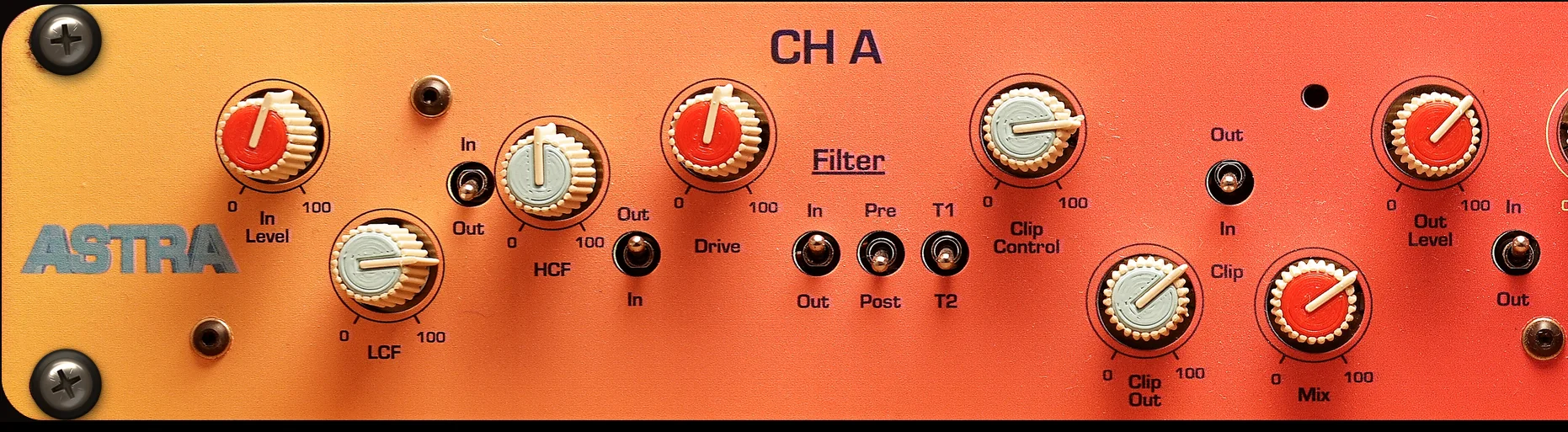
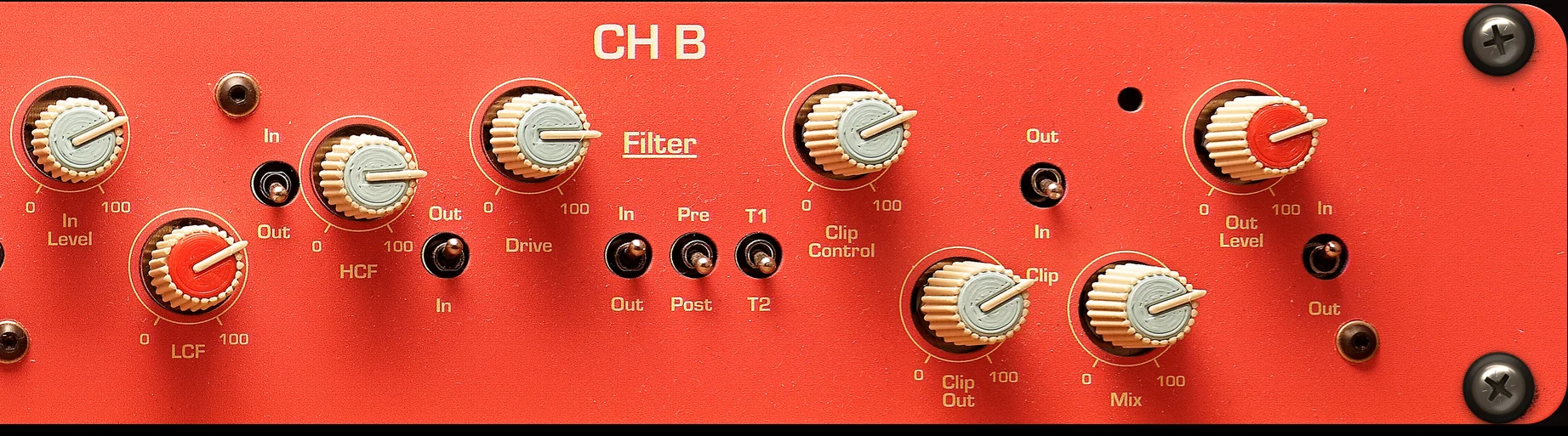
Photographed on the bench.
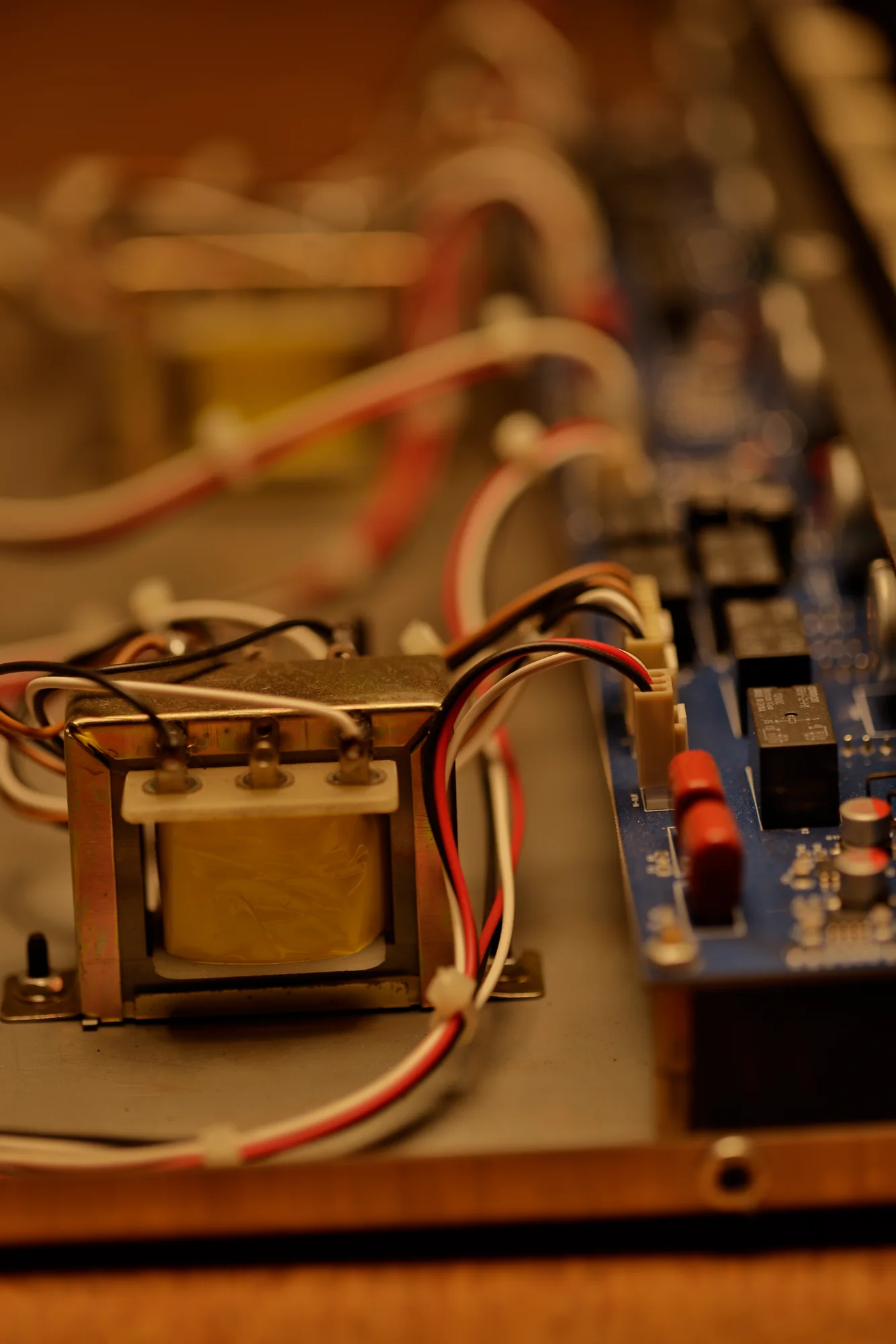
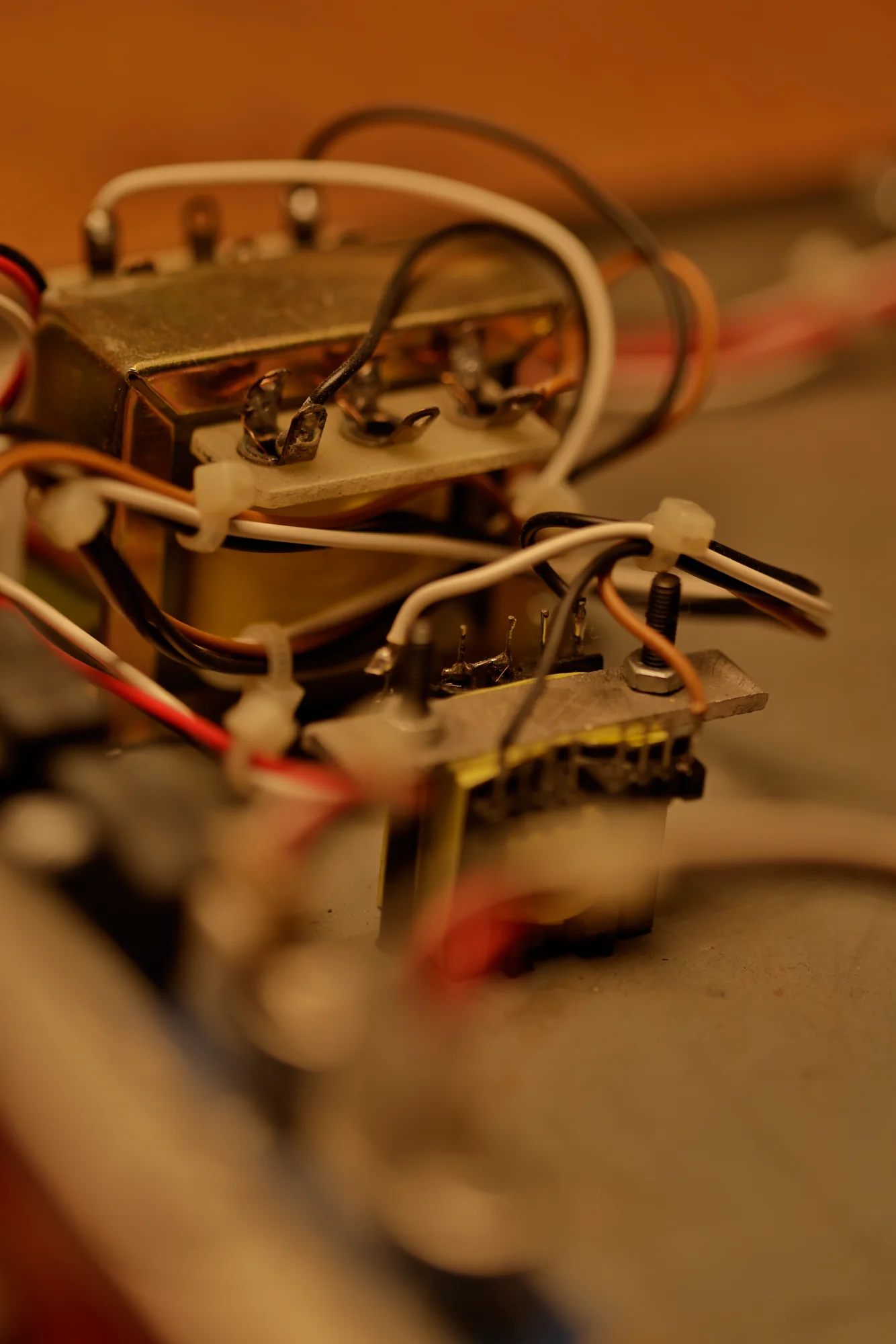
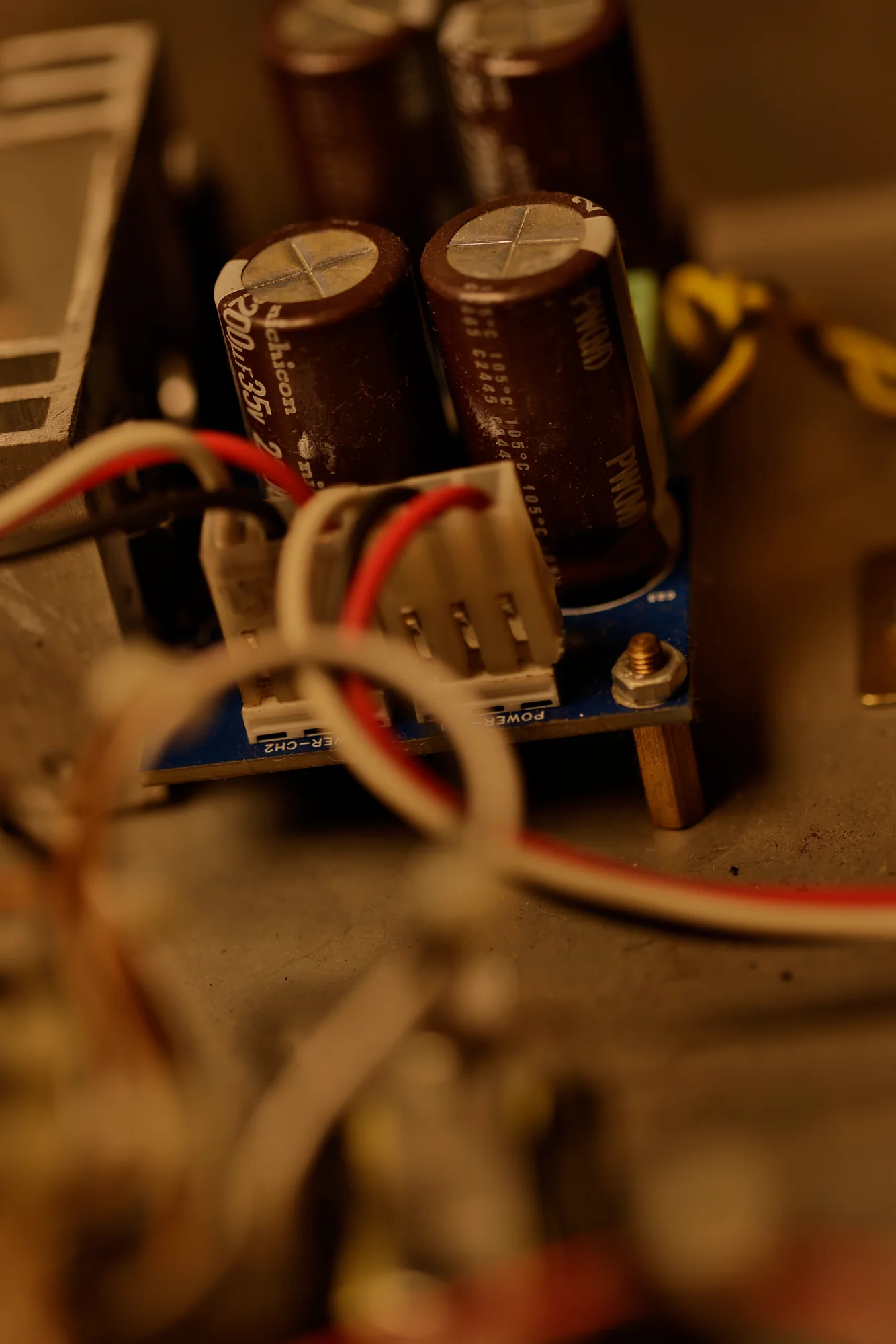
How it works
How the signal travels.
Each channel’s input stage feeds a clean dry path and the processing chain at once; Mix blends them before the balanced output. The filters can come before the saturation or after it.
Input stage
A balanced receiver and In Level, which sets how hard the whole box is driven, wet and dry together. From here the signal splits: a clean dry path, and the processing chain.
Relays and a hard bypass. Gold-contact signal relays do the routing, and the hard bypass wires the input XLR straight to the output XLR, with no electronics in between. Flip the relay switches with playback stopped: a changeover mid-signal can click.
An illustration of the signal path, not a schematic or a measurement.
Controls
Named as printed on the front panel.
In Level
Sets how hard the whole box is driven, wet and dry together. Find unity once against the hard bypass and note the position.Off to +9.9 dB
Choose a control to see what it does. Both channels have the same controls.
Hear it
Dry against Astra, level-matched.
Coming soonBass DI, drum bus, in parallel and lead vocal, recorded dry and through Astra.
Your unit
From your enquiry to your bench.
Astra
Two-channel line-level saturator
1.5U19″ rackBuilt to order
Price on request
Send enquiry
Add Astra to your cart and tell us about your studio and what it’s for. You sign in to send it.
We reply within a week
To your account’s email, and what you asked about stays in your account.
Built to order
Every unit is built for the person who orders it.
Questions first? Write to audiopatchworks@gmail.com
Specifications
Design figures until each unit is measured.
At a glance
- Two channels of balanced line-level saturation
- Two switchable transformers, or no iron at all
- Symmetrical diode clipper with threshold control
- Low cut and high cut, before or after the saturation
- Dry/wet blend for parallel saturation
- Relay routing and a hard bypass
- Type
- Line-level saturator, two channels
- Iron
- Two transformers, relay-selected, with relay bypass
- Clipper
- Symmetrical silicon diodes, two per polarity, variable threshold
- Filters
- Low cut 31 Hz to 1.6 kHz, high cut 2.7 to 19.4 kHz, 6 dB/octave each, before or after saturation
- Gain
- In Level +9.9 dB, Drive +9.9 dB, Clip Out +20.8 dB, Out Level +9.9 dB, plus 6 dB from the balanced driver
- Routing
- Gold-contact signal relays
- Input
- Electronically balanced, 94 kΩ differential
- Output
- Electronically balanced, 47 Ω per leg, about +27 dBu maximum
- Connectors
- XLR in and out: pin 1 ground, pin 2 hot, pin 3 cold
- Power
- ±15 V DC
- Rack space
- 1.5U, 19″ rack
- Front panel
- 65.9 × 482.6 mm
- Frequency response
- Not yet measured
- THD
- Not yet measured
- Noise
- Not yet measured
- Maximum levels
- Not yet measured
Each figure will be measured on the bench and published here with the test conditions behind it.
In a chain
One way to run it, in signal order.