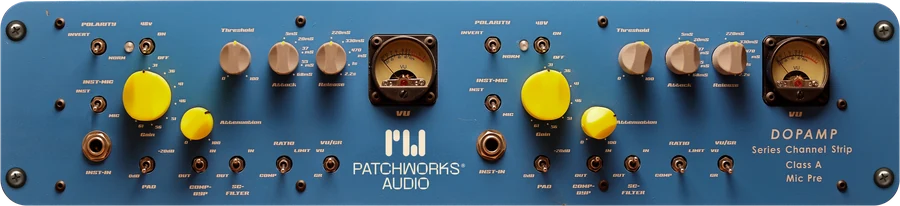
DOPAMP
Gain from thirteen transistors. Control from an LED and a photocell.
Two-channel mic pre and opto compressor
Price on request. Built to order
The sound
Control that is hard to make sound processed.
Thirteen transistors
A fully discrete, class-A op-amp. Neither output device ever switches off: no crossover distortion.
Stepped gain
Seven precise 5 dB steps that switch without a thump.
Two transformers
An isolated input and a balanced output. No active device touches the microphone until it has been isolated and stepped up.
Made of light
An LED-and-photocell gain cell with feedback detection. No VCA ever touches the audio.
The opto feel
The photocell adds its own response on top of the detector: its attack lags by a few milliseconds, and its release stretches after long, heavy compression. That two-stage release is what gives opto compressors their smooth, program-dependent feel.
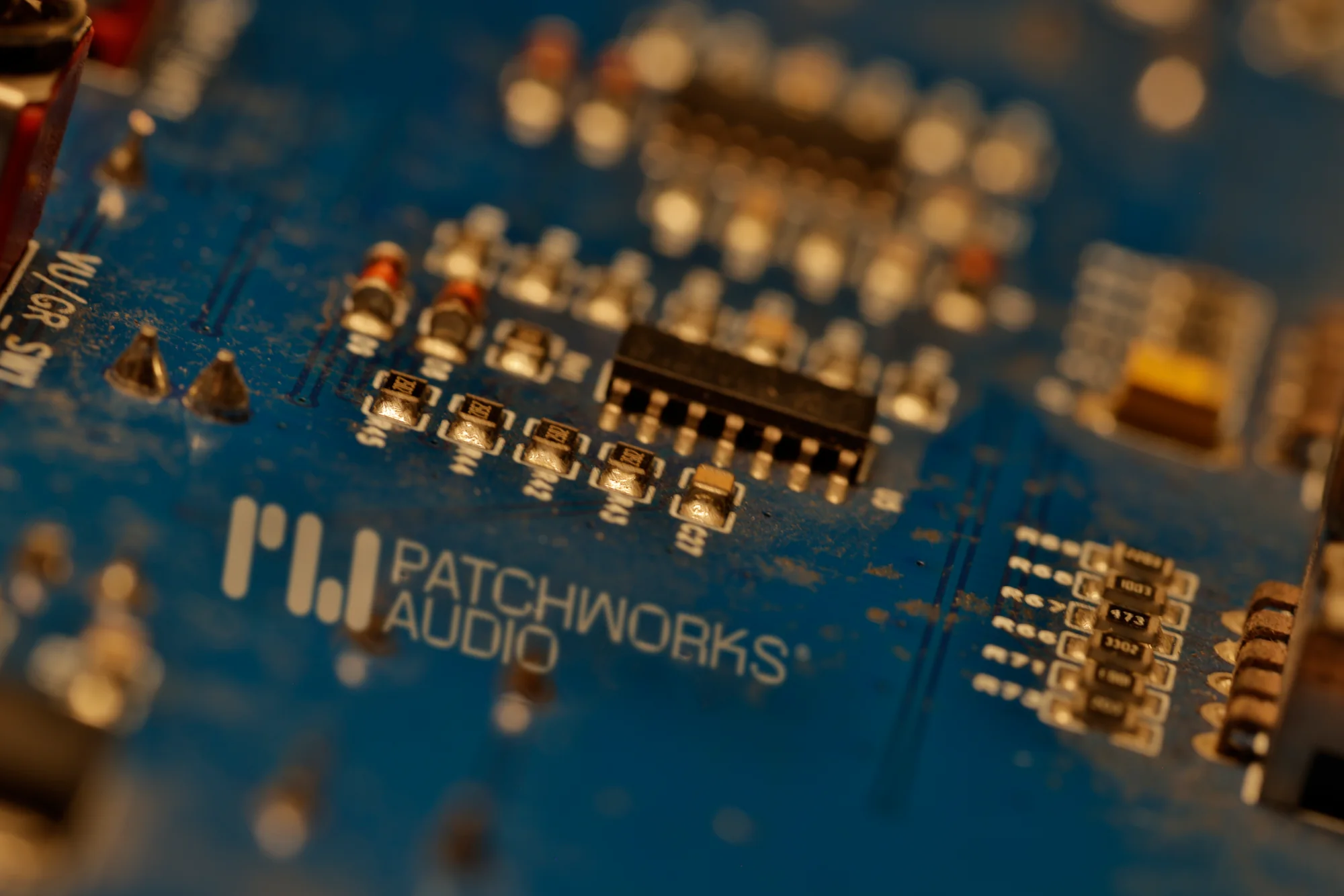
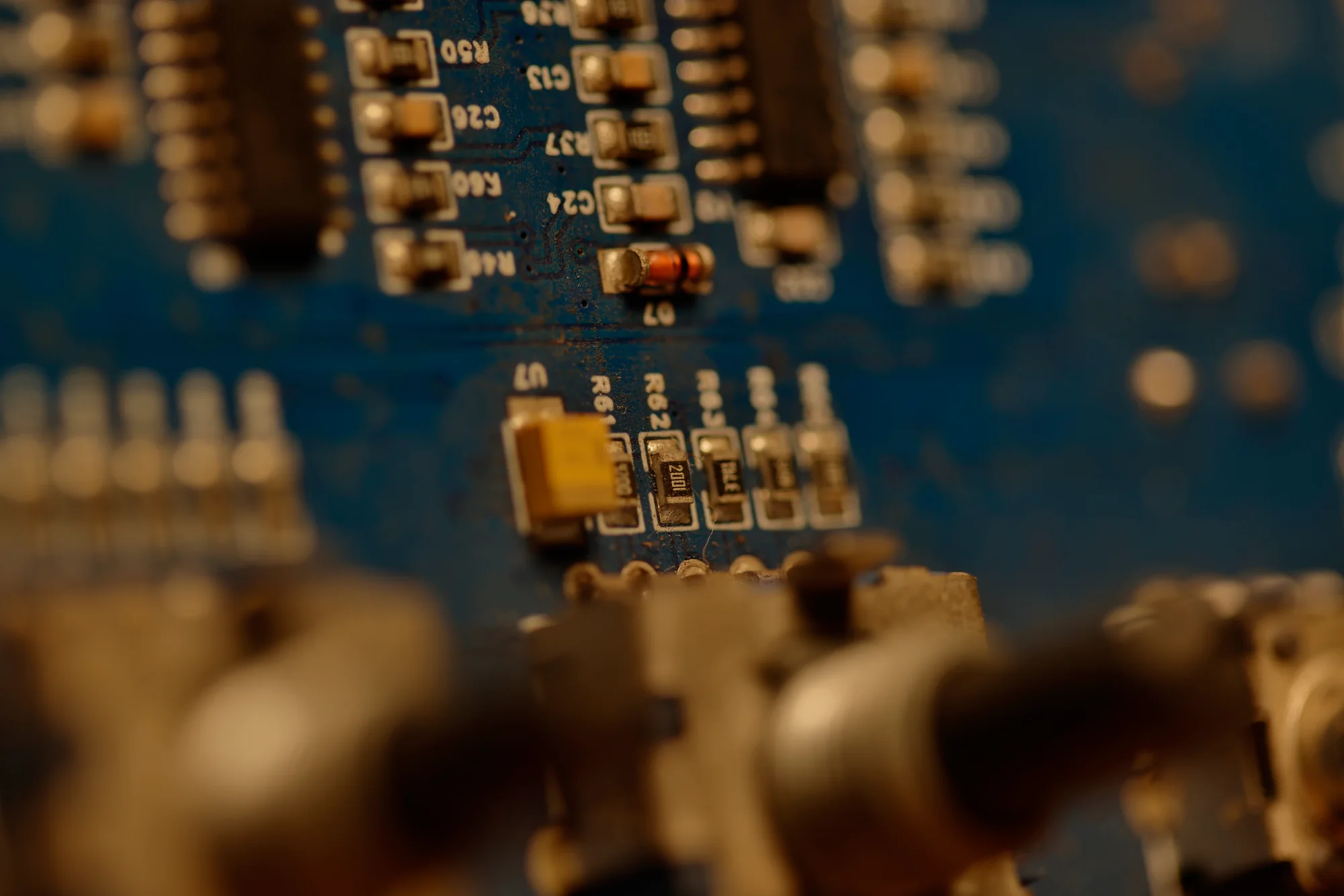
Up close
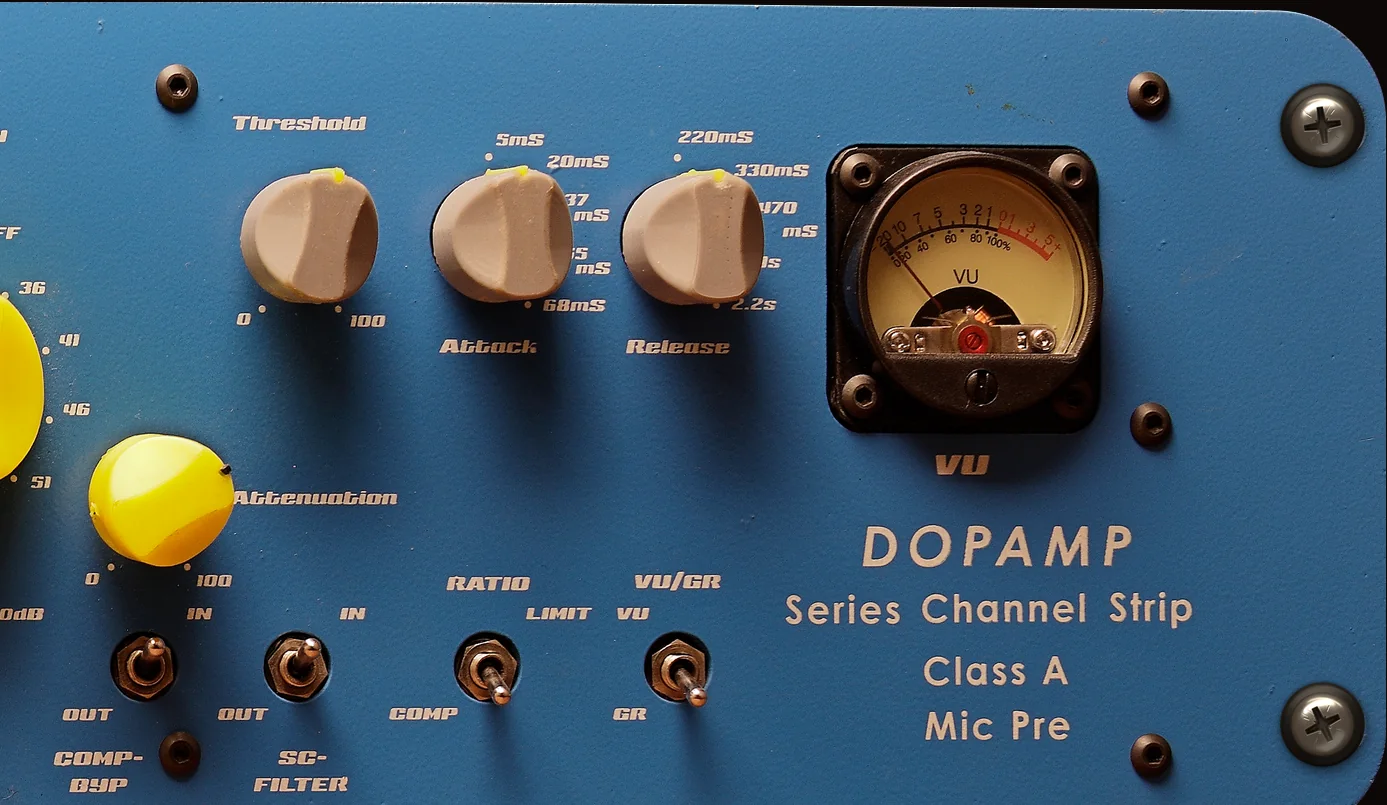
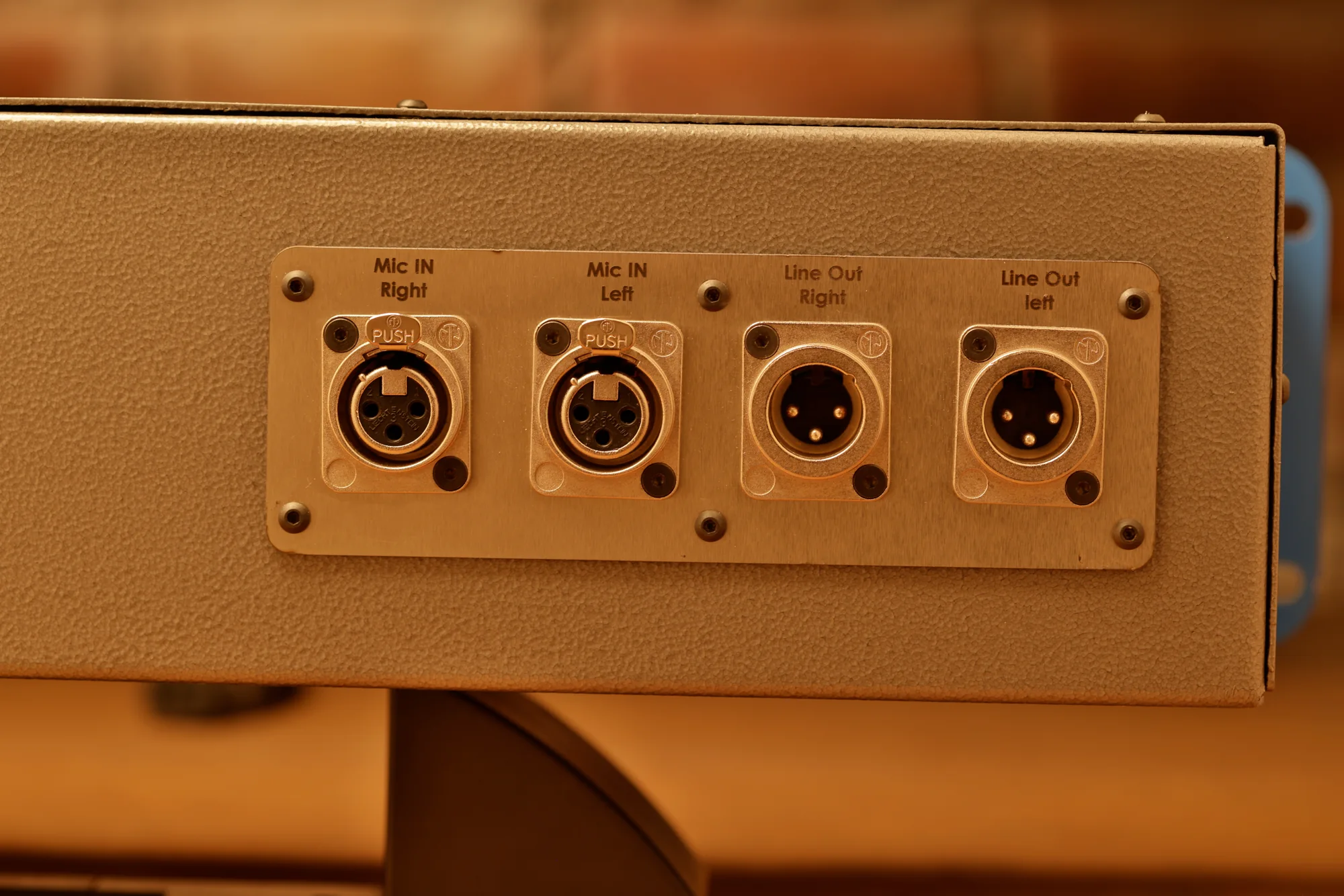
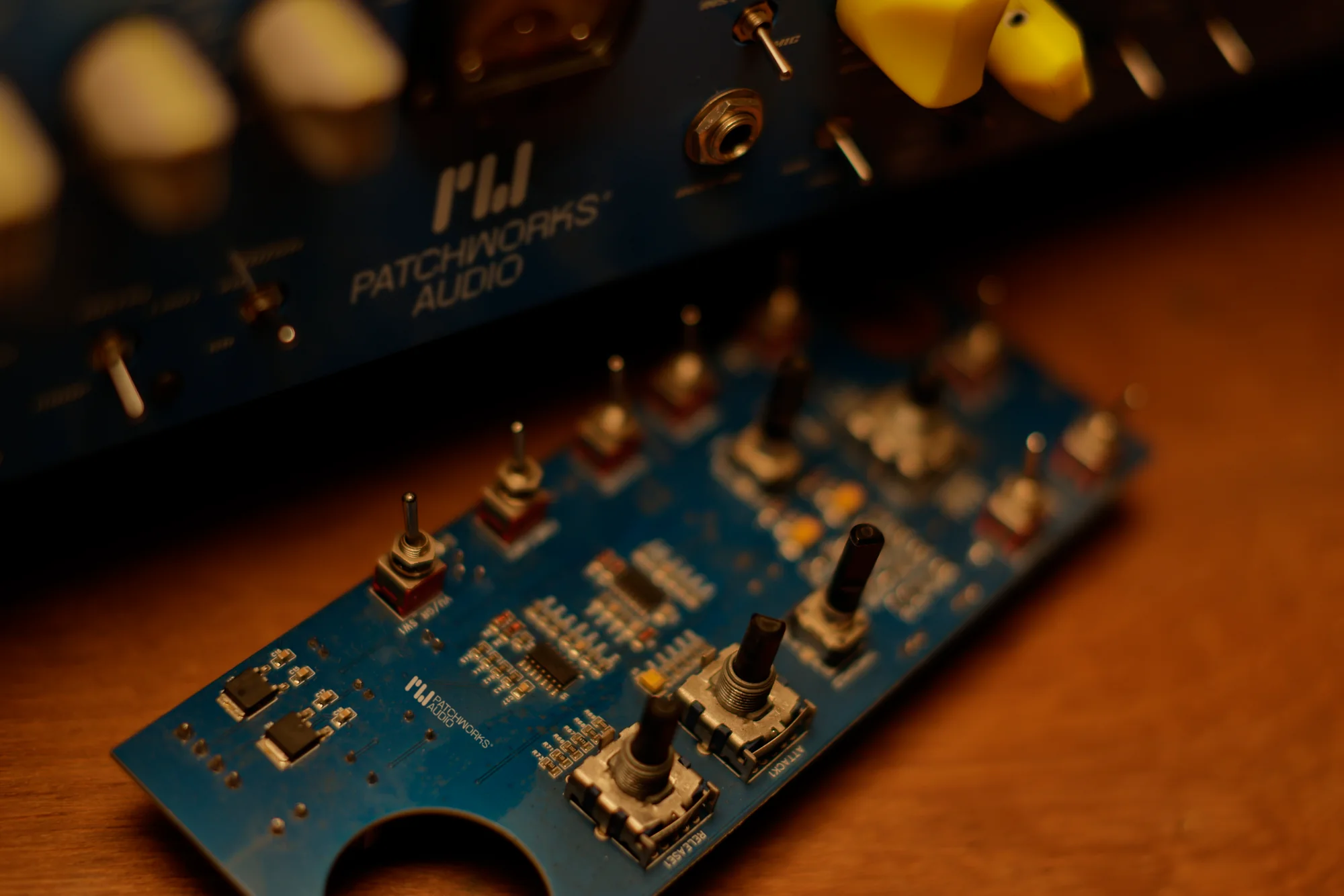
Photographed on the bench.
How it works
How the signal moves.
Audio runs straight through: XLR, transformer, opto cell, amplifier, transformer, out. The compressor is the loop beneath it: it listens to the amplifier’s output, turns level into light, and that light dims the signal at the opto cell.
Input transformer
Everything ahead of the amplifier is passive: phantom feed, pad, polarity switch and transformer. The transformer gives galvanic isolation, high common-mode rejection and voltage gain before any active device.
An illustration of the signal path, not a schematic or a measurement.
Controls
Named as printed on the front panel.
48V
Phantom power, through matched feed resistors and a filter that ramps it up over about 44 ms, so switching it on doesn’t thump. The LED beside it lights when it’s on.
Choose a control to see what it does. Both channels have the same controls.
Hear it
Dry against DOPAMP, level-matched.
Coming soonSound samples are being recorded.
Your unit
From your enquiry to your bench.
DOPAMP
Two-channel mic pre and opto compressor
2.5U19″ rackBuilt to order
Price on request
Send enquiry
Add DOPAMP to your cart and tell us about your studio and what it’s for. You sign in to send it.
We reply within a week
To your account’s email, and what you asked about stays in your account.
Built to order
Every unit is built for the person who orders it.
Questions first? Write to audiopatchworks@gmail.com
Specifications
Design figures until each unit is measured.
At a glance
- Two channels of discrete mic preamp and optical compressor
- Fully discrete, class-A amplifier: thirteen transistors
- Transformers at both ends: isolated input, balanced output
- Optical gain cell with feedback detection
- Instrument input on the front of each channel
- Switchable VU / gain-reduction meter on each channel
- Amplifier
- Discrete op-amp, class A
- Rails
- ±30 V, about +28 dBu of swing
- Gain
- Seven 5 dB steps
- Gain cell
- Optical, NSL-32
- Detection
- Feedback, full-wave peak
- Attack
- Five steps, marked 5 mS to 68 mS
- Release
- Five steps, marked 220 mS to 2.2 s
- Sidechain filter
- About 160 Hz high-pass, switchable
- Metering
- Moving-coil, VU or GR
- Microphone inputs
- XLR, transformer-isolated, one per channel
- Instrument inputs
- ¼″ Hi-Z jack, front panel, one per channel
- Line outputs
- XLR, transformer-balanced, one per channel
- Phantom power
- +48 V, switched on each channel
- Power
- ±30 V and +48 V DC in
- Rack space
- 2.5U, 19″ rack
- Front panel
- 110.3 × 482.6 mm
- EIN
- Not yet measured
- THD+N
- Not yet measured
- Frequency response
- Not yet measured
Each figure will be measured on the bench and published here with the test conditions behind it.
In a chain
One way to run it, in signal order.