ToneShaper
Four bands and two filters, exactly flat at the centre.
Two-channel equaliser
Price on request. Built to order
The sound
Boost and cut in exact mirror image.
The two mid bands overlap across the region that matters most for vocals and guitars, so two separate moves can be made in the same area, such as a narrow cut beside a broad lift.
Exactly flat at the centre
Every band is flat at its centre detent, and that comes from the structure of the circuit itself, not from trimming component values.
Gentle shelves
A 6 dB/octave slope, in the tradition of classic console EQs. Even large boosts blend smoothly into the rest of the spectrum.
Proportional Q
The bells narrow as the gain increases. Subtle moves stay musical, while big corrective moves stay targeted.
An honest bypass
Each section switches completely out of circuit, so the bypassed sound is the dry signal from the stage before.
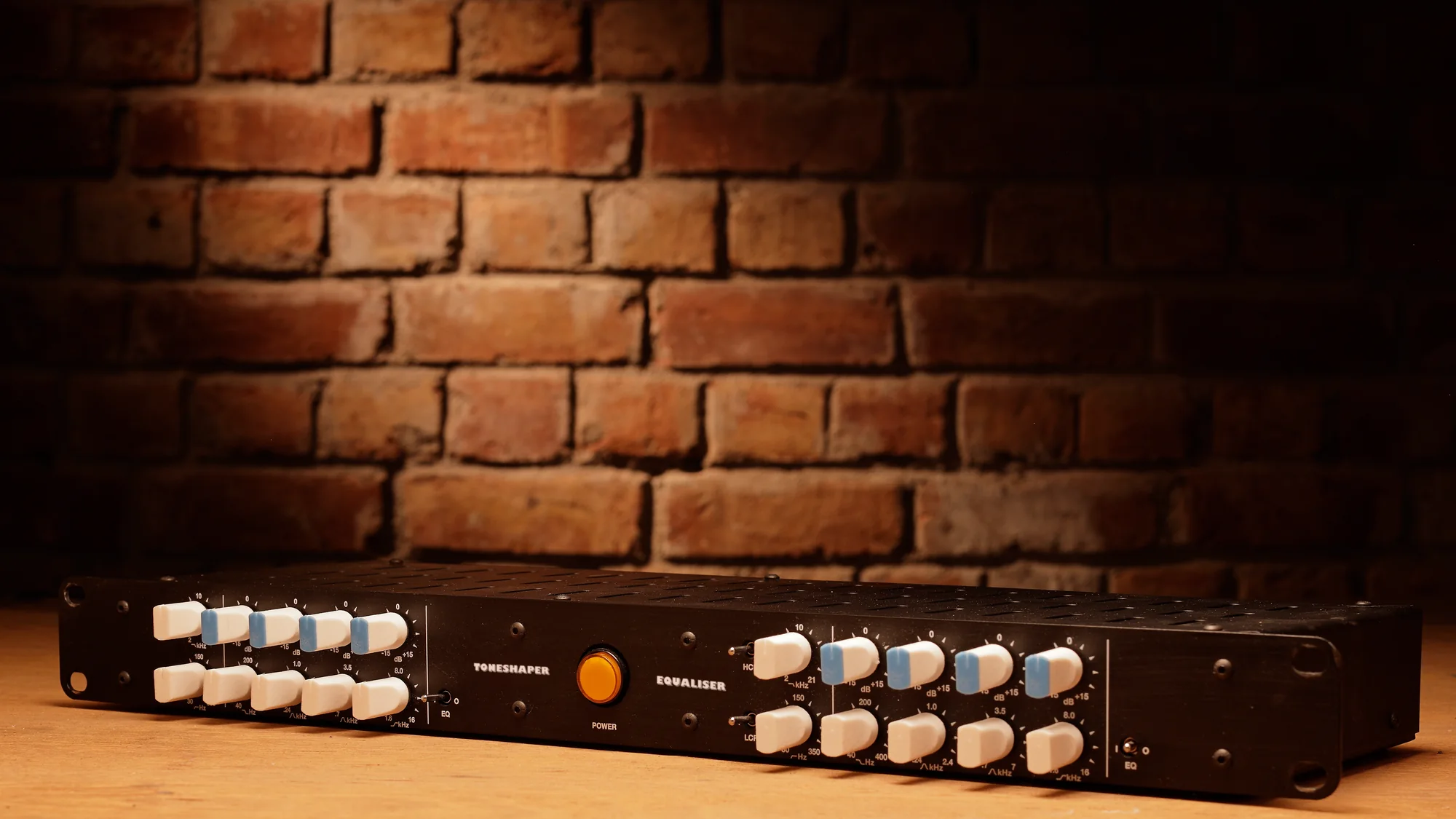
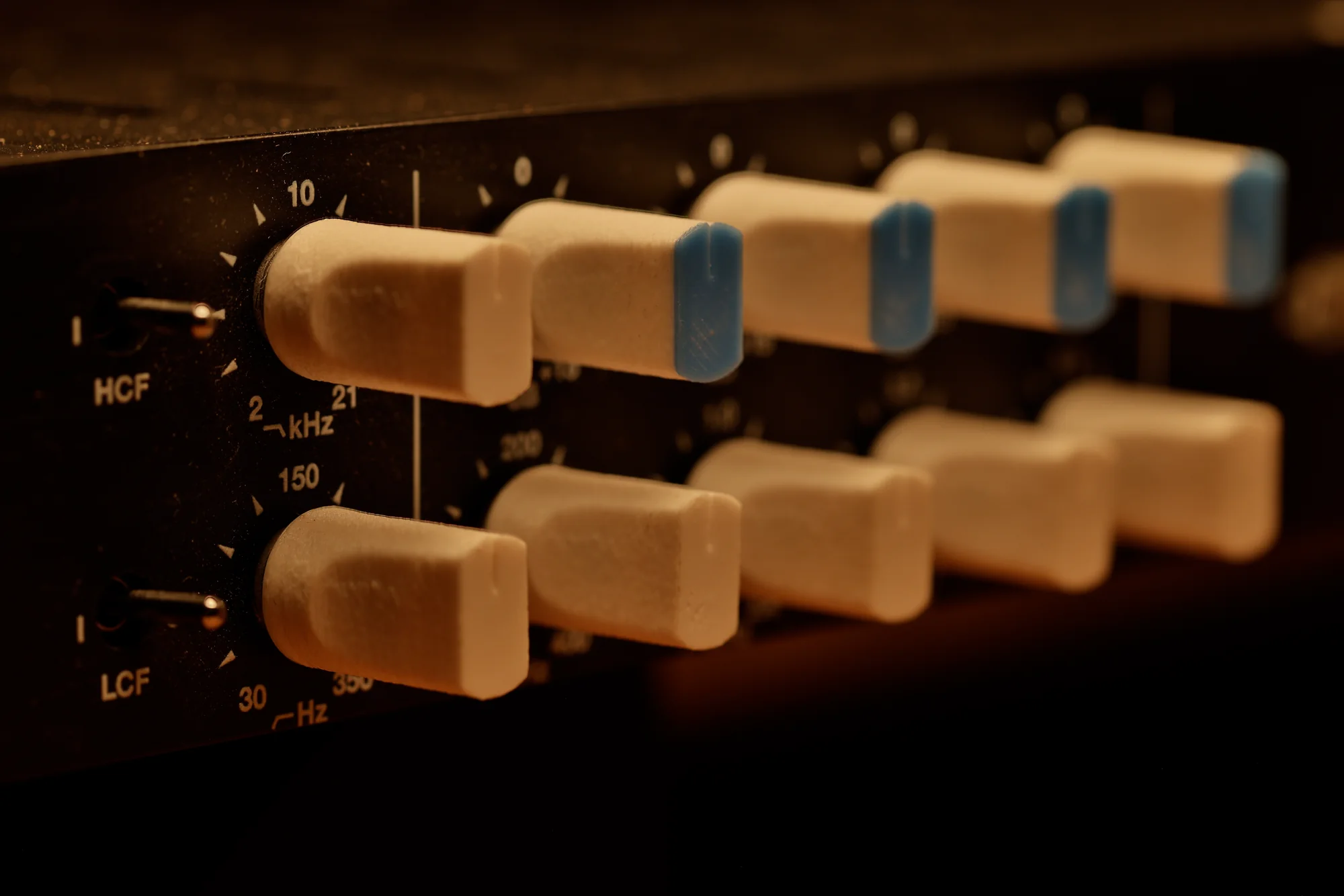
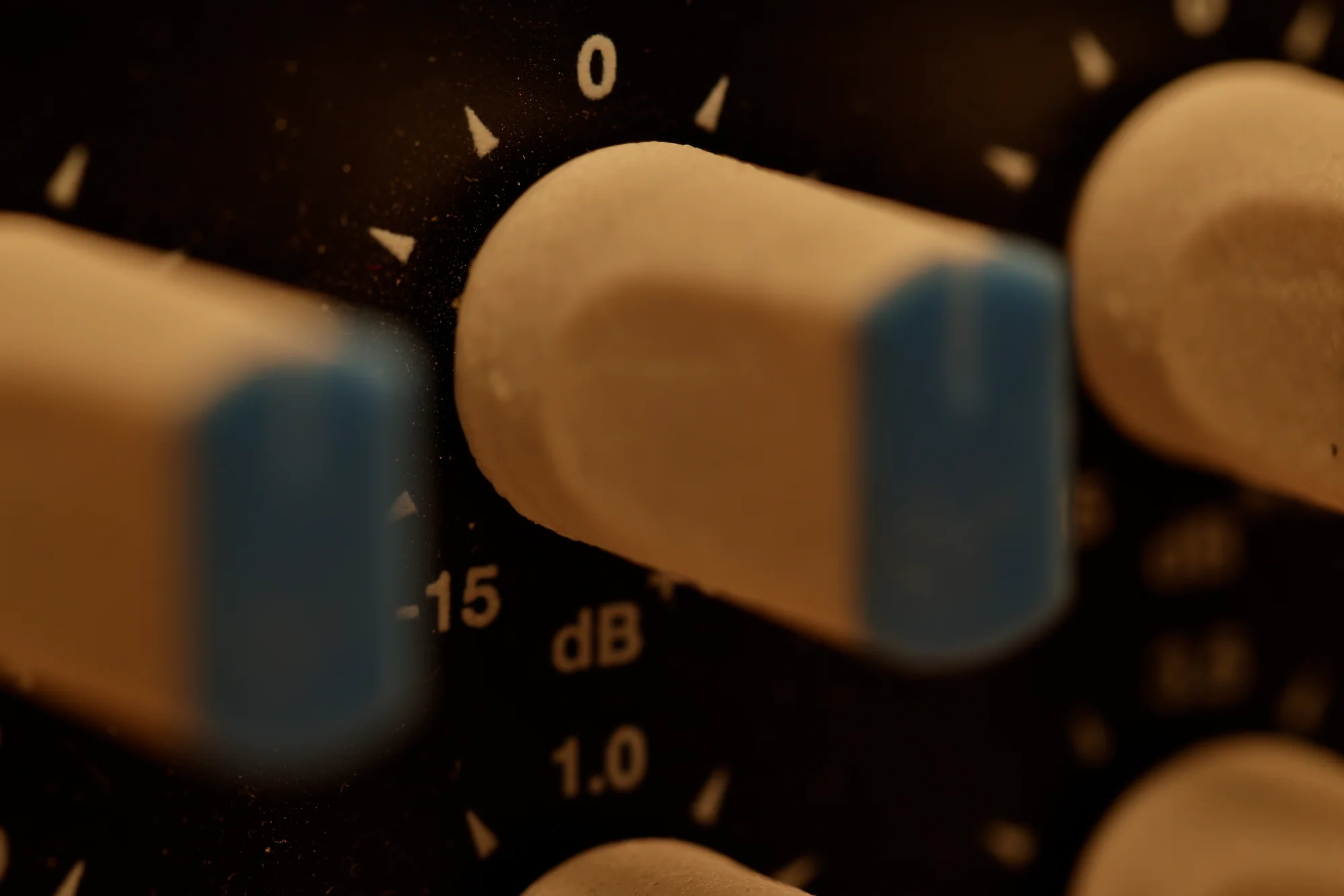
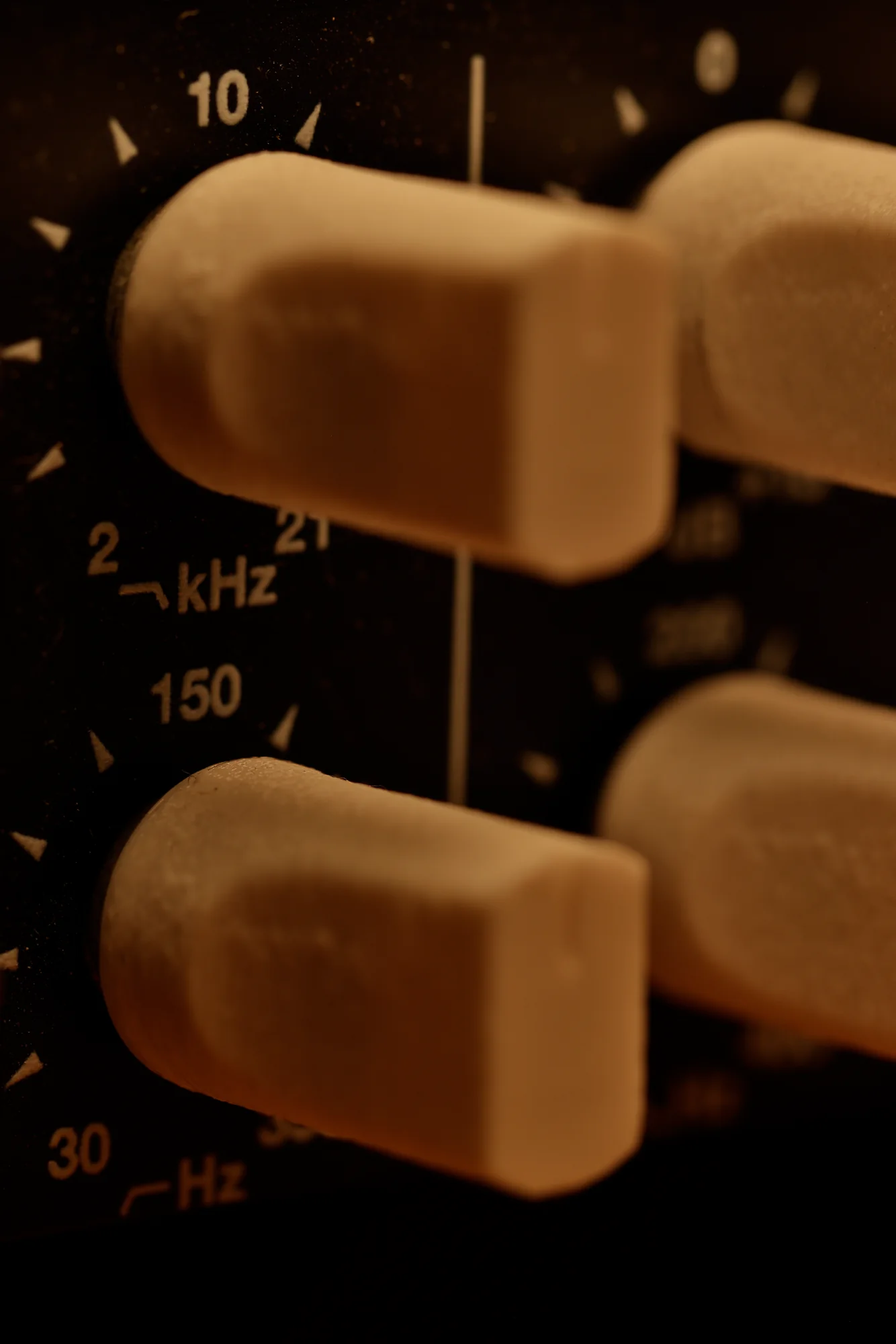
Up close
Photographed on the bench.
How it works
Six stages, in order.
A fully transformerless, balanced path: the input, the trim, the Low Cut and High Cut filters, the four bands, the output. The filters sit ahead of the equaliser, so its boost stages never see the rumble the Low Cut removes.
Balanced input
Electronically balanced and transformerless, built around a precision differential line receiver. It subtracts the two legs, so hum and interference picked up equally on both cancel while the audio passes at unity gain. An RF filter on each leg shunts radio interference away first.
Hard-wired bypass. Three double-pole toggles take the Low Cut, the High Cut and the EQ out of the signal path entirely. A bypassed section is physically disconnected, not just set flat: an honest A/B.
An illustration of the signal path, not a schematic or a measurement.
Controls
Named as printed on the front panel.
LCF
The Low Cut: a 12 dB/octave high-pass for rumble and excess low end. The switch puts it in (I) or takes it out of circuit (O); the knob sweeps it.Marked 30 Hz to 350 Hz
Choose a control to see what it does. Both channels have the same controls; POWER, in the middle, serves both.
Hear it
Dry against ToneShaper, level-matched.
Coming soonSound samples are being recorded.
Your unit
From your enquiry to your bench.
ToneShaper
Two-channel equaliser
1U19″ rackBuilt to order
Price on request
Send enquiry
Add ToneShaper to your cart and tell us about your studio and what it’s for. You sign in to send it.
We reply within a week
To your account’s email, and what you asked about stays in your account.
Built to order
Every unit is built for the person who orders it.
Questions first? Write to audiopatchworks@gmail.com
Specifications
Design figures until each unit is measured.
At a glance
- Two channels in 1U
- Four bands: low and high shelves, two sweepable mids
- Sweepable Low Cut and High Cut, 12 dB/octave
- Exactly flat at the centre; boost and cut in mirror image
- Hard-wired bypass for each filter and the EQ
- Transformerless, balanced in and out
- Type
- Line-level equaliser, two channels
- Bands
- Low shelf, low-mid, high-mid, high shelf, in series
- Shelves
- 6 dB/octave; marked 40 Hz to 400 Hz and 1.6 kHz to 16 kHz
- Mid bands
- Bell, proportional Q; marked 0.24 to 2.4 kHz and 0.7 to 7 kHz
- Band gain
- Marked −15 to +15 dB, centre detent
- Low Cut
- 12 dB/octave, Q 0.5; marked 30 Hz to 350 Hz
- High Cut
- 12 dB/octave, Q 0.5; marked 2 kHz to 21 kHz
- Bypass
- Hard-wired: Low Cut, High Cut and EQ
- Input trim
- Internal, 0 to −10 dB
- Overall gain
- Set by the input trim, −4 dB to +6 dB
- Input
- Electronically balanced, transformerless, RF filtered
- Output
- Balanced, transformerless, 50 Ω per leg; drives unbalanced inputs without loss of level
- Power
- ±15 V DC
- Rack space
- 1U, 19″ rack
- Front panel
- 43.7 × 482.6 mm
- Frequency response
- Not yet measured
- THD+N
- Not yet measured
- Noise
- Not yet measured
- Maximum input level
- Not yet measured
- Maximum output level
- Not yet measured
- Crosstalk between channels
- Not yet measured
Each figure will be measured on the bench and published here with the test conditions behind it.
In a chain
One way to run it, in signal order.