
Two-channel pre
Glassy highs. Liquid low end. Warmth in perfect balance.
Valve mic and instrument pre
Price on request. Built to order
The sound
A perfect blend of vintage and modern tonality.
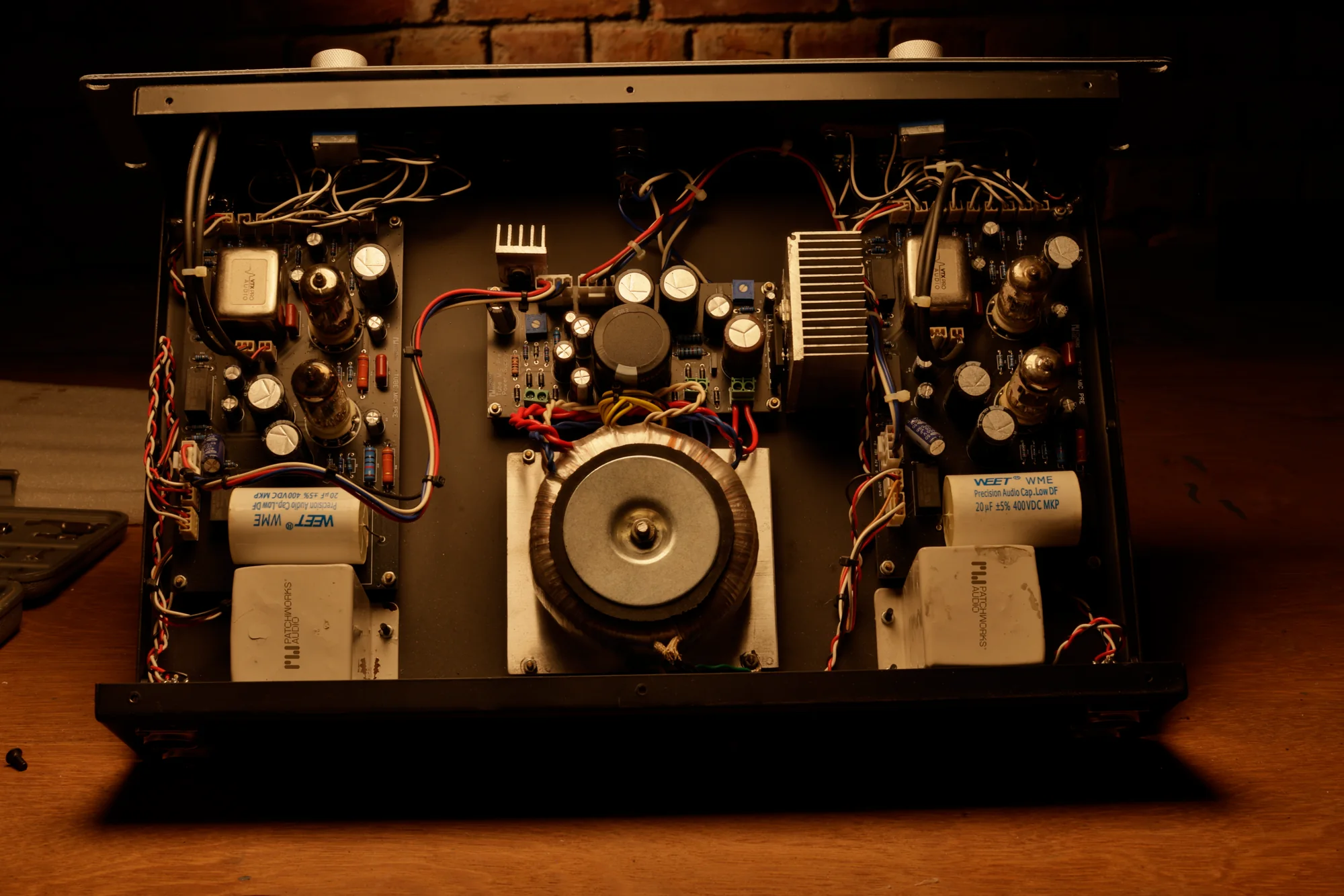
Each channel is a complete, independent preamp with its own valves, input and output transformers and high-tension filtering, so it works equally well as a stereo pair or as two mono channels. Voiced for firm, articulate vocals and progressive guitars, and at home in almost every session.
Glassy highs
Top end that is open, clear and detailed: air and presence without grain or harshness.
Liquid low end
Lows that are full, round and fluid: weight that flows under the mix rather than thumping on top of it.
Balanced warmth
Enough valve warmth to flatter any source, never so much that it clouds the mix or needs undoing later.
Vintage and modern
The texture of a valve console with the low noise, headroom and dependable switching of a modern studio tool.
Two voicings in every channel
Normal is controlled and polished: the tightest, cleanest sound. +10 dB is dense and characterful: more gain and more valve harmonics. Start in Normal for a polished lead; switch to +10 dB for dynamic and ribbon microphones, or when more harmonic density is wanted.
Reach for it on
- Lead and backing vocals
- Voice-over and podcast
- Acoustic guitar
- Electric guitar, DI or miked
- Bass DI
- Drum overheads and room mics
- Piano and keys
- Strings and brass
- Stereo pairs
Up close
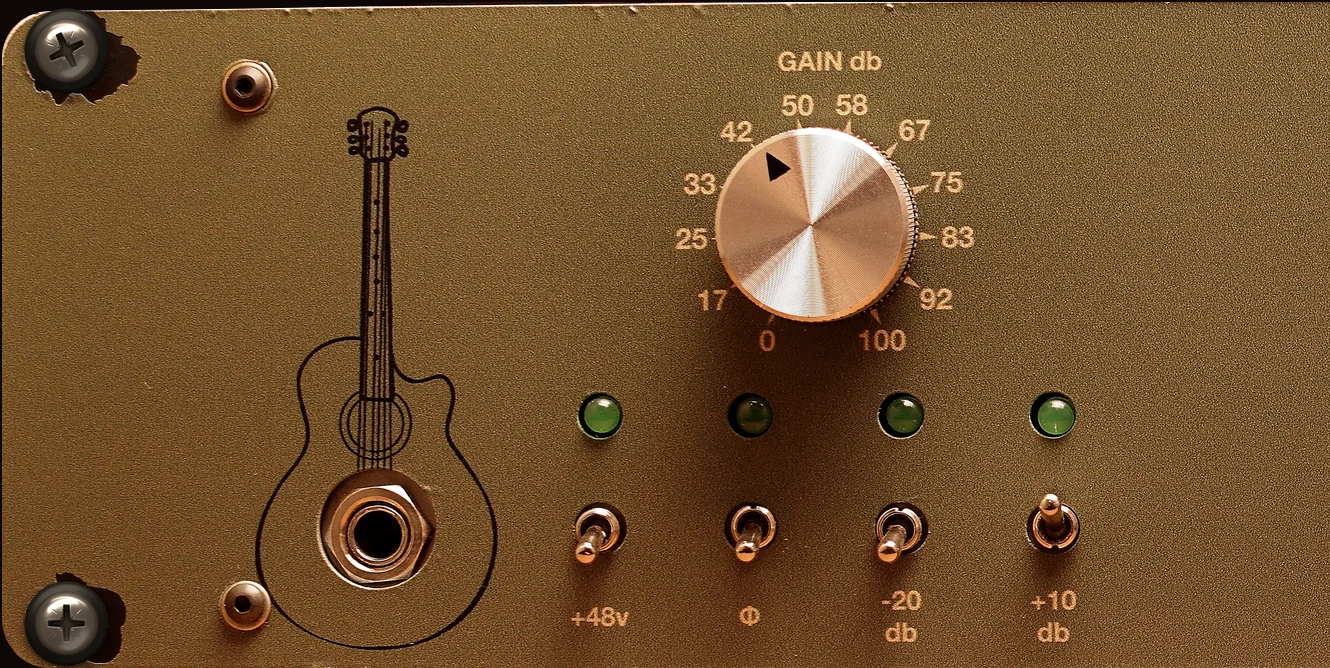
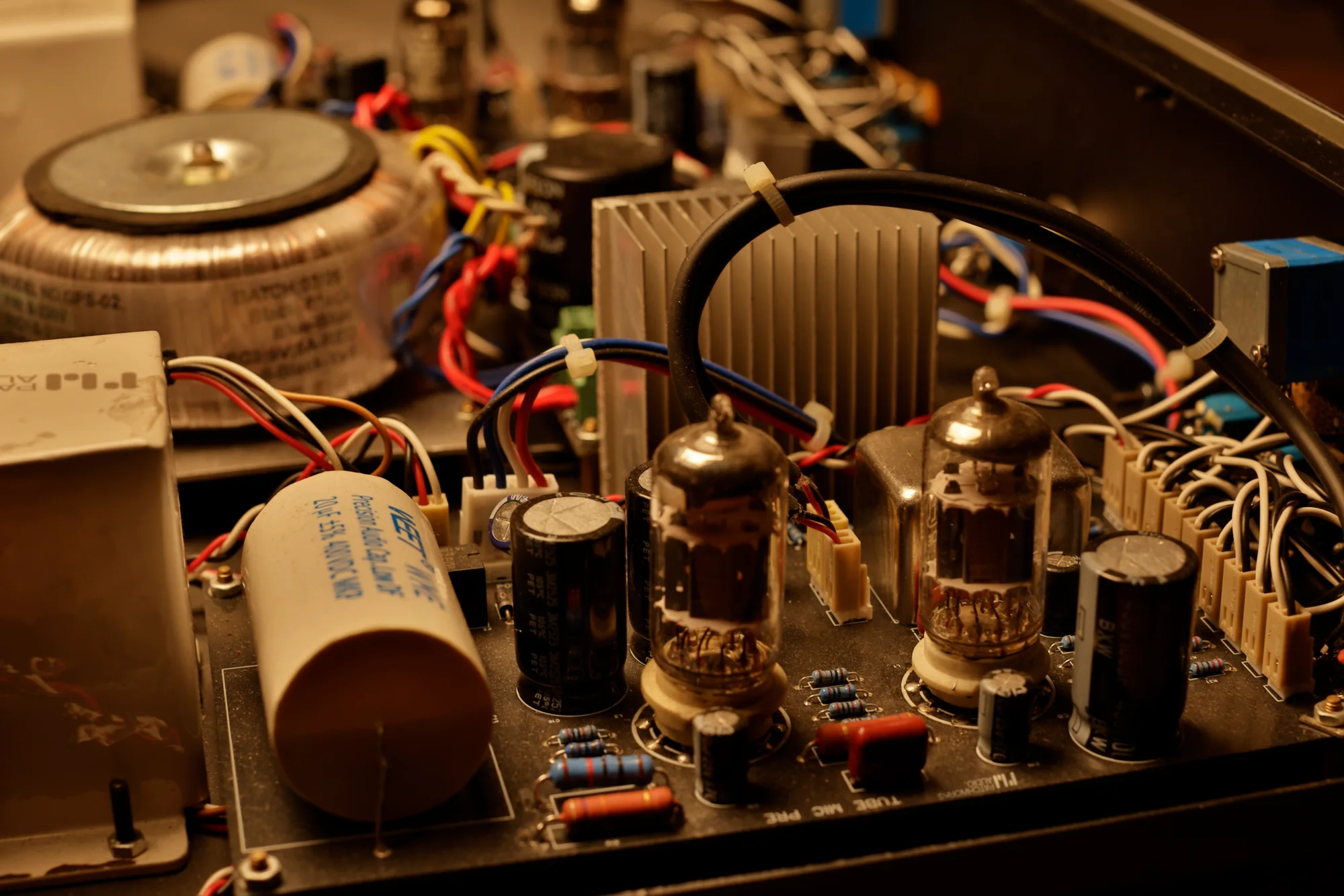
Photographed on the bench.

How it works
Three valves under one feedback loop.
Each of the two channels follows the same path: transformer in, three valve stages under one feedback loop, transformer out.
Input transformer
A balanced step-up: low-noise gain, isolation and common-mode rejection. A relay-switched pad and +48 V phantom sit ahead of it.
Quiet supplies. Valve circuits are only as quiet as the supplies behind them. Three separate supplies, each filtered for what it feeds: DC-regulated heaters, a regulated phantom supply and three-stage filtering of the high tension.
An illustration of the signal path, not a schematic or a measurement.
Controls
Named as printed on the front panel.
Instrument jack
A ¼″ input on every channel. Plugging in disconnects the microphone transformer and feeds the instrument straight to the gain control, with the full valve path and output transformer behind it.About 100 kΩ, unbalanced
Choose a control to see what it does. Both channels have the same controls; Power, in the middle, serves both.
Hear it
Dry against Two-channel pre, level-matched.
Coming soonLead vocal, electric guitar, DI and acoustic guitar, recorded dry and through Two-channel pre.
Your unit
From your enquiry to your bench.
Two-channel pre
Valve mic and instrument pre
2U19″ rackBuilt to order
Price on request
Send enquiry
Add Two-channel pre to your cart and tell us about your studio and what it’s for. You sign in to send it.
We reply within a week
To your account’s email, and what you asked about stays in your account.
Built to order
Every unit is built for the person who orders it.
Questions first? Write to audiopatchworks@gmail.com
Specifications
Design figures until each unit is measured.
At a glance
- Two independent channels, stereo or dual-mono
- All-valve path: two ECC83 stages and an ECC82 follower
- Transformer-balanced in and out
- Two voicings on every channel: Normal and +10 dB
- Pad, phantom power and polarity on every channel
- Instrument input on the front of every channel
- Type
- Valve microphone preamplifier
- Channels
- 2, independent
- Valves
- ECC83 and ECC82 per channel
- Feedback
- Global, relay-switched: Normal and +10 dB
- Input
- Transformer-balanced, floating
- Output
- Transformer-balanced, floating, outside the feedback loop
- Switching
- Gold-contact relays
- Heaters
- DC regulated
- Maximum output
- About +22 dBu into 10 kΩ, about +15 dBu into 600 Ω
- Microphone inputs
- 2 × XLR, transformer-balanced
- Instrument inputs
- 2 × ¼″ jack, front panel, about 100 kΩ
- Line outputs
- 2 × XLR, transformer-balanced
- Phantom power
- +48 V, regulated, switched on each channel
- Rack space
- 2U, 19″ rack
- Front panel
- 88.1 × 482.6 mm
- Frequency response
- Not yet measured
- THD+N
- Not yet measured
- EIN
- Not yet measured
- Maximum output level
- Not yet measured
Each figure will be measured on the bench and published here with the test conditions behind it.
In a chain
One way to run it, in signal order.







